
SE Asia’s Share of Global OSAT Capacity Breaks 20% for the First Time
Outsourced Semiconductor Assembly and Test (OSAT) has long been the quiet backbone of the chip industry, turning bare wafers into usable, reliable packaged devices. For decades, much of the attention has focused on front‑end fabrication hubs in the US, Europe, Taiwan, Korea, and increasingly China.
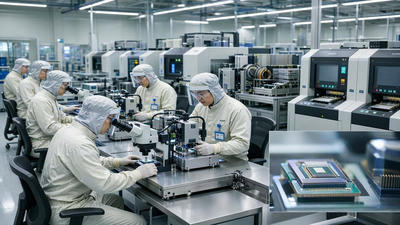
This is more than a statistic. It signals a structural shift in where value is added, where jobs are created, and where geopolitical and supply‑chain resilience are being built. As packaging and test become more central to advanced semiconductors—from AI chips to automotive devices—Southeast Asia’s growing role creates new opportunities and new strategic questions for chipmakers, equipment vendors, policymakers, and investors.
Why OSAT capacity share matters
On the surface, OSAT may look like a relatively commoditized business: assembling chips into packages, performing electrical tests, and shipping finished parts to customers. In reality, the back‑end has been moving up the value chain. Advanced packaging—such as flip‑chip, fan‑out, 2.5D and 3D integration, chiplets, and system‑in‑package—has become integral to performance, power, and cost characteristics of leading chips.
Global OSAT capacity share matters because it indicates where this increasingly strategic work is being done. Regions with significant OSAT footprints host critical infrastructure: skilled labor, specialized equipment, engineering know‑how, and dense supplier networks. As Southeast Asia’s share breaks 20%, it signals that the region is locking in a prominent place in the semiconductor ecosystem, not just as a low‑cost manufacturing zone but as a key node in advanced packaging and test.
For chipmakers, this means that decisions about where to place back‑end operations, how to manage supply risk, and how to tap regional strengths now increasingly involve Southeast Asia. For governments and investors, it underscores that back‑end capacity is a lever for industrial policy and economic development, not merely a peripheral activity.
The path to 20%: decades of incremental build‑up

Southeast Asia did not reach a 20% share of global OSAT capacity overnight. The region’s rise reflects decades of incremental investment, starting with cost‑driven outsourcing and evolving toward more sophisticated capabilities.
In earlier phases, global chipmakers and OSAT firms sought locations with competitive labor costs, favorable tax regimes, and improving infrastructure. Countries such as Malaysia, the Philippines, Thailand, Vietnam, and Singapore attracted assembly and test plants by offering industrial parks, skilled technicians, and supportive policies. Multinationals co‑located with local firms, gradually building a cluster effect.
Over time, the nature of work shifted. Simple wire‑bond and leadframe packaging gave way to more complex technologies. As global customers demanded higher density, better thermal performance, and lower parasitics, OSAT facilities in Southeast Asia upgraded equipment, trained engineers, and adopted advanced packaging processes. Regional players emerged and grew from local subcontractors into global OSAT companies with multi‑country footprints.
As this evolution continued, the region’s share of global capacity crept upward. Crossing the 20% threshold reflects the cumulative effect of many decisions: expansions by global OSAT giants, new plants tied to automotive and industrial electronics, and investments in advanced packaging targeted at AI, mobile, and consumer markets.
Drivers behind Southeast Asia’s OSAT expansion
Several structural drivers have supported Southeast Asia’s growing OSAT footprint and helped push capacity share beyond 20%.
Cost and competitiveness. The region offers a blend of competitive labor costs, improving productivity, and increasingly sophisticated skill sets. OSAT is labor‑ and equipment‑intensive; balancing cost and capability is critical. Southeast Asia’s mix has proved attractive for both standard and increasingly complex packaging and test tasks.
Policy support and investment incentives. Governments in the region have actively promoted electronics manufacturing. Incentives, tax benefits, infrastructure development, education programs, and streamlined business regulations have encouraged both foreign direct investment and local firm growth in OSAT and related sectors.
Proximity to front‑end and system assembly hubs. Southeast Asia sits near major front‑end fabs in East Asia and near large electronics assembly hubs. Shorter logistics chains between wafer production, back‑end packaging, and final system integration reduce cost and lead times, making the region attractive for integrated supply chains.
Diversification and risk management by global chipmakers. As supply‑chain resilience has become a strategic priority, chipmakers and OSAT providers have sought to diversify beyond single‑country dependencies. Southeast Asia offers multiple countries with compatible capabilities, allowing a distributed footprint that mitigates geopolitical and operational risks.
Growing local ecosystem. Once a critical mass of OSAT capacity is present, upstream and downstream ecosystems grow: materials suppliers, equipment vendors, logistics specialists, and design and test services. This ecosystem effect reinforces the region’s competitive position and supports further capacity additions.
Together, these drivers created a flywheel where each new investment made the region more attractive for the next one, eventually pushing its global capacity share past 20%.
From commodity packaging to advanced OSAT

A key part of the story is the qualitative shift in what Southeast Asia’s OSAT capacity does. Crossing 20% capacity share matters more when a significant portion of that capacity supports advanced packaging and complex test rather than only legacy formats.
Advanced packaging techniques—such as ball grid arrays (BGA), flip‑chip, fan‑out wafer‑level packaging (FOWLP), and various forms of 2.5D/3D integration—have been increasingly adopted in facilities across the region. These processes demand sophisticated equipment, tight process control, and close collaboration with chip designers to meet signal integrity, thermal, and reliability requirements.
On the test side, Southeast Asian OSAT providers have expanded capabilities to handle high‑speed interfaces, RF and mmWave devices, automotive‑grade reliability tests, and complex system‑in‑package validations. As more chips integrate heterogeneous functions—logic, memory, RF, power—back‑end test has become as critical as front‑end process control.
The region’s OSAT firms also participate in early joint‑development projects with customers, helping to co‑design packages that optimize performance and cost. This blurs the line between “outsourced” and strategic partnership, making Southeast Asian OSAT a core component of global chip innovation rather than a purely transactional service.
Breaking the 20% global capacity barrier against this backdrop means that a significant portion of the world’s advanced packaging and test work is now rooted in Southeast Asia.
Geopolitical and supply‑chain implications
Southeast Asia’s rising OSAT share carries geopolitical and supply‑chain implications that go beyond industry economics.
From a risk perspective, having 20%+ of global OSAT capacity in Southeast Asia diversifies supply away from concentration in a few countries. This can reduce systemic vulnerability to localized disruptions—whether geopolitical tension, natural disasters, or policy shifts—in any one region. At the same time, it creates new dependencies: disruptions within Southeast Asia, such as major floods or political instability, would now have larger global impact.
Geopolitically, the region’s semiconductor role strengthens its strategic importance. Countries that host substantial OSAT capacity become more central to global technology supply chains, which may influence trade relations, security considerations, and diplomatic engagement. This can encourage further policy support for semiconductor‑related industries as governments recognize the leverage and economic value these sectors bring.
For multinational chipmakers and OSAT providers, the geopolitical dimension reinforces the need for multi‑country strategies within Southeast Asia itself. A footprint across several nations can hedge country‑specific risks while leveraging the region’s overall strengths.
In effect, surpassing 20% OSAT capacity share moves Southeast Asia from “regional manufacturing base” to “strategic global node” in semiconductor supply networks.
Impacts on equipment, materials, and talent

Expanded OSAT capacity in Southeast Asia reshapes upstream and downstream sectors, including equipment, materials, and talent development.
Equipment vendors increasingly treat Southeast Asia as a priority market. Advanced packaging and test equipment—from pick‑and‑place machines and molding systems to high‑density testers and thermal management gear—must be supported locally. Vendors expand service centers, training programs, and inventory depots in the region to meet demand and maintain uptime for OSAT plants.
Materials suppliers—encapsulation resins, leadframes, substrates, solder balls, underfill materials, and more—scale operations to serve growing OSAT needs. Local production and warehousing reduce dependence on long import chains, improving responsiveness and resilience. In some cases, Southeast Asian firms emerge as materials innovators, contributing to global packaging advances.
Talent development becomes a central priority. Universities, technical institutes, and corporate training centers in the region ramp programs in semiconductor packaging, test engineering, materials science, equipment maintenance, and quality assurance. This fuels the growth of a skilled workforce capable of handling complex OSAT tasks and supporting R&D activities.
As these ecosystems mature, Southeast Asia’s OSAT capacity is supported by increasingly sophisticated local infrastructure, reinforcing the sustainability of its 20%+ global share.
Opportunities and challenges for regional players
For OSAT firms and related businesses in Southeast Asia, crossing the 20% threshold presents both opportunities and challenges.
Opportunities. Regional firms can leverage the scale and visibility of Southeast Asia’s OSAT footprint to win more global business, participate in cutting‑edge packaging projects, and move up the value chain. Joint ventures with global chipmakers, collaboration on advanced packaging R&D, and co‑development of specialized modules (e.g., automotive, power, AI) become more feasible.
The region can also position itself as a center for specific OSAT niches—such as automotive test, consumer advanced packaging, or power module assembly—building brand and expertise that attract targeted investments and customers.
Challenges. At the same time, the region must manage increasing complexity. Advanced packaging requires tight quality control, robust IP protection, and ongoing investment in equipment and skills. Margin pressure can be significant, as customers demand competitive pricing while pushing for performance improvements.
Competition between countries within Southeast Asia will likely intensify, as each seeks to capture more of the semiconductor pie. Balancing collaboration and competition, avoiding a race to the bottom on incentives, and maintaining sustainable industrial policies will be important.
Environmental and social considerations also rise in prominence. Large OSAT operations consume energy, use chemicals, and employ large workforces. Managing environmental impact, workplace safety, and community relations becomes critical to maintaining the legitimacy and long‑term viability of the sector.
Regional players that navigate these opportunities and challenges effectively can solidify Southeast Asia’s role as an indispensable OSAT hub.
Implications for global chipmakers and fabless firms
For global chipmakers and fabless design houses, Southeast Asia’s expanded OSAT capacity changes how back‑end strategies are formulated.
Companies designing chips must consider where and how their devices will be packaged and tested. With a significant share of capacity in Southeast Asia, design teams may engage more directly with OSAT partners in the region to co‑develop packages that match performance and cost goals. Time zones, cultural familiarity, and local engineering capabilities shape collaboration patterns.
Supply‑chain strategies increasingly treat Southeast Asian OSAT as a default option rather than a fringe. Companies may favor multi‑site packaging and test across several countries to mitigate risk, or they may choose to concentrate specific product lines in selected regional OSAT hubs that specialize in relevant technologies.
As advanced packaging becomes central to AI, high‑performance computing, and automotive chips, fabless firms must integrate OSAT considerations earlier in their design process. Package constraints and capabilities—from thermal limits and pin counts to interconnect geometries and test coverage—are defined in close consultation with OSAT providers, many of whom now operate large facilities in Southeast Asia.
Overall, Southeast Asia’s 20%+ share of global OSAT capacity makes the region a strategic partner in chip realization, not merely a downstream service provider.
Looking ahead: sustaining and shaping the next phase
Breaking the 20% threshold is a milestone, but the trajectory of Southeast Asia’s OSAT role will depend on how the region and its partners shape the next phase.
On the technology front, continued investment in advanced packaging and test is essential. As chip architectures evolve—chiplets, disaggregated systems, 3D stacking—the back‑end’s complexity will increase. Southeast Asia’s OSAT capacity must keep pace with these changes to remain relevant and valuable.
On the policy front, governments must balance incentives with long‑term sustainability. Supporting OSAT and broader semiconductor ecosystems through targeted education, infrastructure, and R&D funding may yield more durable benefits than aggressive short‑term tax breaks alone. Regional cooperation—such as standards alignment and cross‑border talent mobility—could enhance collective competitiveness.
On the business front, OSAT providers and their partners should focus on building deep technical capabilities, strong customer relationships, and robust quality and reliability records. Differentiation through expertise, not just cost, will be key to sustaining growth as the global OSAT landscape becomes more sophisticated.
If these elements align, Southeast Asia could not only maintain a 20%+ share of global OSAT capacity but also increase its share in the most advanced, high‑value segments of packaging and test. In that scenario, the region would be a central pillar of future semiconductor innovation and supply resilience.
Conclusion: a new chapter for Southeast Asia in semis
Southeast Asia’s share of global OSAT capacity breaking 20% for the first time marks a significant chapter in the evolution of the semiconductor industry. It confirms the region’s transition from peripheral manufacturing base to strategic hub for packaging and test, including increasingly advanced processes that are critical to modern chips.
For industry participants worldwide, this milestone is a cue to reassess supply‑chain strategies, collaboration models, and policy frameworks. As semiconductors become ever more central to economic and geopolitical futures, the places where they are assembled and tested matter more than ever—and Southeast Asia is now firmly among those places, shaping the way chips move from wafers to the systems that power modern life.
You May Like

Narrowing Spread Between NAND Spot and Contract Prices in 2026 – A Signal
By 2026, one of the most watched metrics in the NAND flash market has started to shift in a subtle but meaningful way: the spread between spot prices and long‑term contract prices is narrowing. For casual observers, this may look like just another incremental change in a notoriously volatile industry. For memory makers, module houses, device OEMs, and data center buyers, however, a tightening gap between spot and contract prices is a signal—a reflection of evolving supply–demand balance, risk perceptions, and strategic behavior on both sides of the market.

Price Divergence Trading Strategies Between NAND Flash and DRAM ETFs
NAND flash and DRAM sit at the core of AI storage and computing power. Both are memory, but they are not the same business. DRAM is main memory—fast, volatile, and central to high‑bandwidth workloads like AI training and inference. NAND is non‑volatile storage—slower than DRAM, but crucial to persistent data and large‑scale object storage. The cycles that drive their pricing and margins overlap, yet they often diverge. That divergence is where trading strategies between NAND and DRAM ETFs become interesting.

China’s HBM Localization Progress: The Catch-Up Pace of CXMT and XMC
China’s drive to localize advanced memory technologies has accelerated over the past several years. High-Bandwidth Memory (HBM) sits near the center of that strategy because it is integral to AI accelerators, high-performance computing (HPC) and other strategic compute platforms. Two domestic players—ChangXin Memory Technologies (CXMT) and XMC (Xianghui Memory, commonly referred to as XMC)—have become focal points in assessing how quickly China can close the gap with international incumbents on HBM die, stacking, and packaging.

Thermal Simulation Challenges and Solutions in 3DIC AI Chip Design
As AI workloads push chips to deliver ever higher compute density, designers are increasingly turning to three‑dimensional integration (3DIC) to stack dies vertically and pack more functionality into limited footprints. While 3DIC architectures unlock significant performance and bandwidth advantages, they also introduce complex thermal behaviors that are far harder to predict and manage than in traditional 2D layouts.

An Attempt at Compiling a Memory+Compute Fusion Thematic Index – A Dual-Track Framework
Most AI investors talk about “compute” as if it were the whole story: GPUs, accelerators, chips, cores. But every one of those cores needs somewhere to read from and write to. Memory and storage define how wide the data highway really is. In practice, AI performance is a fusion of compute and memory, not a solo act. So why do so many indices and ETFs separate them into different silos—one for semiconductors, one for memory, one for data centers—when the actual workloads keep blending them?

Surging Demand for Laser Drilling and Plasma Dicing Equipment in Advanced Packaging
Advanced packaging has become one of the semiconductor industry’s most important growth engines, and it is now pulling a surprising set of process tools into the spotlight. Among the most in-demand are laser drilling and plasma dicing equipment. These machines sit close to the heart of heterogeneous integration, fan-out packaging, wafer thinning, TSV formation, glass substrate processing, and other advanced flows where precision, yield, and throughput matter enormously. As packaging moves from a back-end afterthought to a strategic platform, the equipment used to shape, open, and separate materials has become just as important as the dies themselves.
D2D Interface Bandwidth and Latency Comparison in Chiplet Architectures
Chiplet architecture has turned the package into a real performance battleground. Once multiple dies are placed side by side or stacked within the same advanced package, the quality of the die-to-die, or D2D, interface becomes one of the most important determinants of system behavior. Bandwidth is no longer a nice-to-have metric, and latency is no longer a small implementation detail. Together, they shape whether a chiplet system feels nearly monolithic or frustratingly fragmented.

Stock Selection Logic and Alpha Validation of ESG-Themed Semi ETFs
Semiconductor themed ETFs are no longer just about growth and cycles. A growing subset now layers environmental, social, and governance (ESG) criteria on top of traditional sector exposure. These ESG semi ETFs promise two things at once: access to one of the market’s most powerful secular themes, and alignment with sustainability and governance standards. The pitch is appealing, but it raises two hard questions. First, how exactly are these stocks being selected? Second, does the ESG overlay help, hurt, or leave alpha unchanged?